
On 20 October 1973,
a 17-year-old forward called Dave Busby came off the bench at the Goldstone Ground. Brighton & Hove Albion were beating Shrewsbury Town in a Third Division match, but the final ten minutes carried a significance that stretched far beyond the result.
Busby was the first Black footballer to play for Albion’s senior team.
His appearance began a strand of the club’s history that would later include Chris Ramsey playing at Wembley, Terry Connor scoring goals in front of the Goldstone’s North Stand, Chris Hughton leading Albion into the Premier League and Hope Powell establishing the women’s team in the Women’s Super League.
These five people did not share the same journey. Two were players at a time when open racism was common on football terraces. Two later reached senior management, where Black coaches were still poorly represented. Hope Powell also had to cross barriers faced by women throughout the game.
Their stories should not be pressed into a simple tale of steady progress. Football has changed since 1973, but change has rarely been quick or complete. What connects these five figures is the part each played in the history of Brighton & Hove Albion, on the pitch, beside it and within the wider game.
Dave Busby: the first step
Dave Busby came to Albion through an unusual route.
He attended a boarding school in Heathfield, East Sussex, where one of his teachers had a connection with the club. The teacher arranged a trial at the Goldstone and later drove him between school and Brighton so that he could play for Albion’s under-16 side.
Busby impressed enough to become an apprentice. He played youth and reserve football before being named as the only substitute for the first team against Shrewsbury Town on 20 October 1973.
Substitutes were used sparingly in those days. When Busby was sent on for the final ten minutes, he became part of Albion history at only 17 years old.
His time in the senior side was brief. He made only a handful of first-team appearances before continuing his career elsewhere, including spells at Worthing, Blackpool and Barrow. A short playing record, however, does not make the moment unimportant.
Busby entered professional football during a period when Black players regularly faced abuse from the crowd and from opponents. He has recalled hearing racist language during matches and having bananas thrown towards him. Players were often expected to ignore it and carry on.
That expectation placed the burden on the person being abused rather than on the people responsible or the authorities running the game.
Busby later returned to Albion to speak with academy players about his experiences. In doing so, he helped connect a younger generation at the club with a history that could otherwise be reduced to a date in a record book.
He was not simply the first name on a list. He was a teenager stepping into a game that had done little to protect Black players.
Chris Ramsey: from the Goldstone to Wembley
Seven years after Busby’s debut, Chris Ramsey joined Albion from Bristol City.
A composed and dependable defender, Ramsey played for Brighton in the top level of English football. He was part of the side that fought successfully against relegation in 1980–81 and became a regular presence at right-back.
His most remembered season came in 1982–83, when Albion made an extraordinary run to the FA Cup final.
Ramsey played in the fifth-round victory over Liverpool at Anfield, one of the outstanding results in the club’s history. Brighton then defeated Norwich City and Sheffield Wednesday to reach Wembley for the first time.
On 21 May 1983, Ramsey started against Manchester United in front of a crowd of almost 100,000. Albion drew 2–2 after extra time and came close to winning the cup in the closing moments.
Ramsey was injured during the match and could not play in the replay five days later, which Manchester United won 4–0. Even so, his appearance in the first match made him Albion’s first Black player to represent the club in a major final.
That description is historically important, but it should not overshadow the footballer. Ramsey was at Wembley because he had earned his place in one of Albion’s most celebrated teams.
His career also continued well beyond his playing days. He moved into coaching and player development, working with young footballers as well as senior teams. He later managed Queens Park Rangers in the Premier League and held senior development roles at the club.
Ramsey’s career offers a bridge between two parts of this story. He was a Black player in the English game of the 1980s and later became one of the relatively small number of Black coaches trusted with senior responsibility in professional football.
Terry Connor: goals, recognition and life at the Goldstone
Terry Connor arrived in Brighton shortly after the 1983 cup final.
Born and raised in Leeds, he joined Albion from Leeds United at the age of 20. The move took him from a large northern city to the south coast, where he and his wife had to build a new life away from home.
Connor later remembered Brighton supporters as passionate but fair. He felt that they judged his performances rather than the colour of his skin. That positive memory should be respected, but it does not mean racism had disappeared from his footballing life.
He had grown up in Chapeltown at a time when the National Front had a visible presence in Leeds. His parents had travelled to Britain from Saint Kitts and Nevis in the 1950s and encountered the racism faced by many members of the Windrush generation.
Connor also experienced racist abuse from opposing supporters and players throughout his career. He has spoken about coaches who relied on crude ideas about the supposed physical strengths and weaknesses of Black footballers.
At Brighton, he became known for his work rate as well as his goals. He scored 51 times in 156 appearances and developed a close relationship with the Goldstone crowd.
His time at the club included difficult seasons. Albion declined after the FA Cup final and were relegated from the Second Division in 1987. Yet even during that relegation season, Connor’s performances stood out.
Supporters and teammates chose him as Albion’s Player of the Season for 1986–87. He was the first Black player to receive the award.
Connor has said the recognition mattered because it was based on how he played. Learning later that he was the first Black recipient added another layer to the honour.
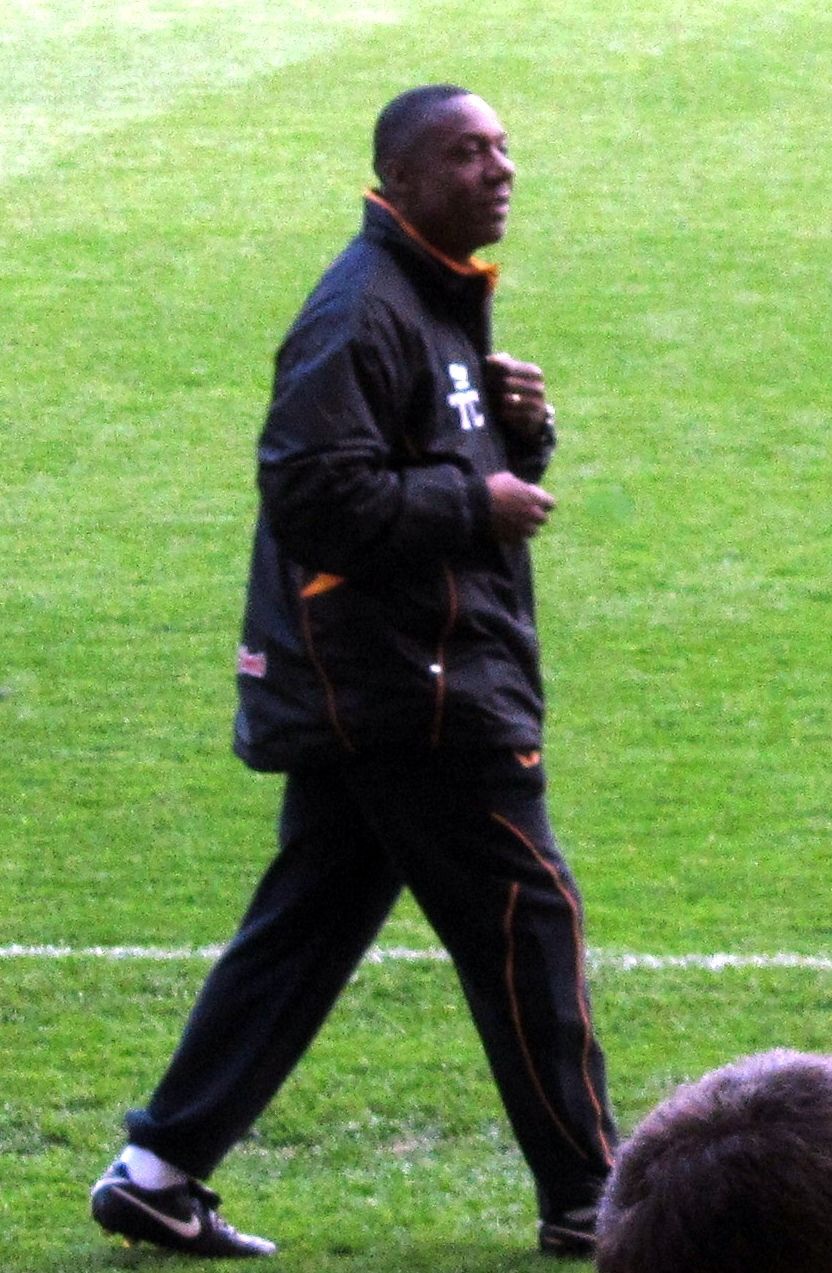
After leaving Brighton for Portsmouth in 1987, he continued his playing career before moving into coaching. He became a long-serving assistant to Mick McCarthy at several clubs and with the Republic of Ireland. He also took charge of Wolverhampton Wanderers during the 2011–12 Premier League season.
Like Ramsey, Connor moved from playing into a part of football where Black professionals have often found opportunities limited. His career was not confined to what he achieved at the Goldstone, but Brighton remained an important chapter within it.
A long gap before Black leadership
By the time Connor left in 1987, several Black footballers had represented Albion. More followed during the difficult years when the club lost the Goldstone Ground, played at Gillingham and eventually returned to Brighton at Withdean.
The presence of Black players became less unusual, although racism did not vanish from football.
Leadership changed more slowly.
It was not until December 2014, more than 41 years after Busby’s debut, that Albion appointed its first Black male manager.
Chris Hughton arrived with the club in danger of falling into League One. He did not enter a stable or successful side waiting for a final push. Albion had won only three league matches during the first half of the 2014–15 season.
His first job was survival.
Chris Hughton: calm leadership and Premier League promotion
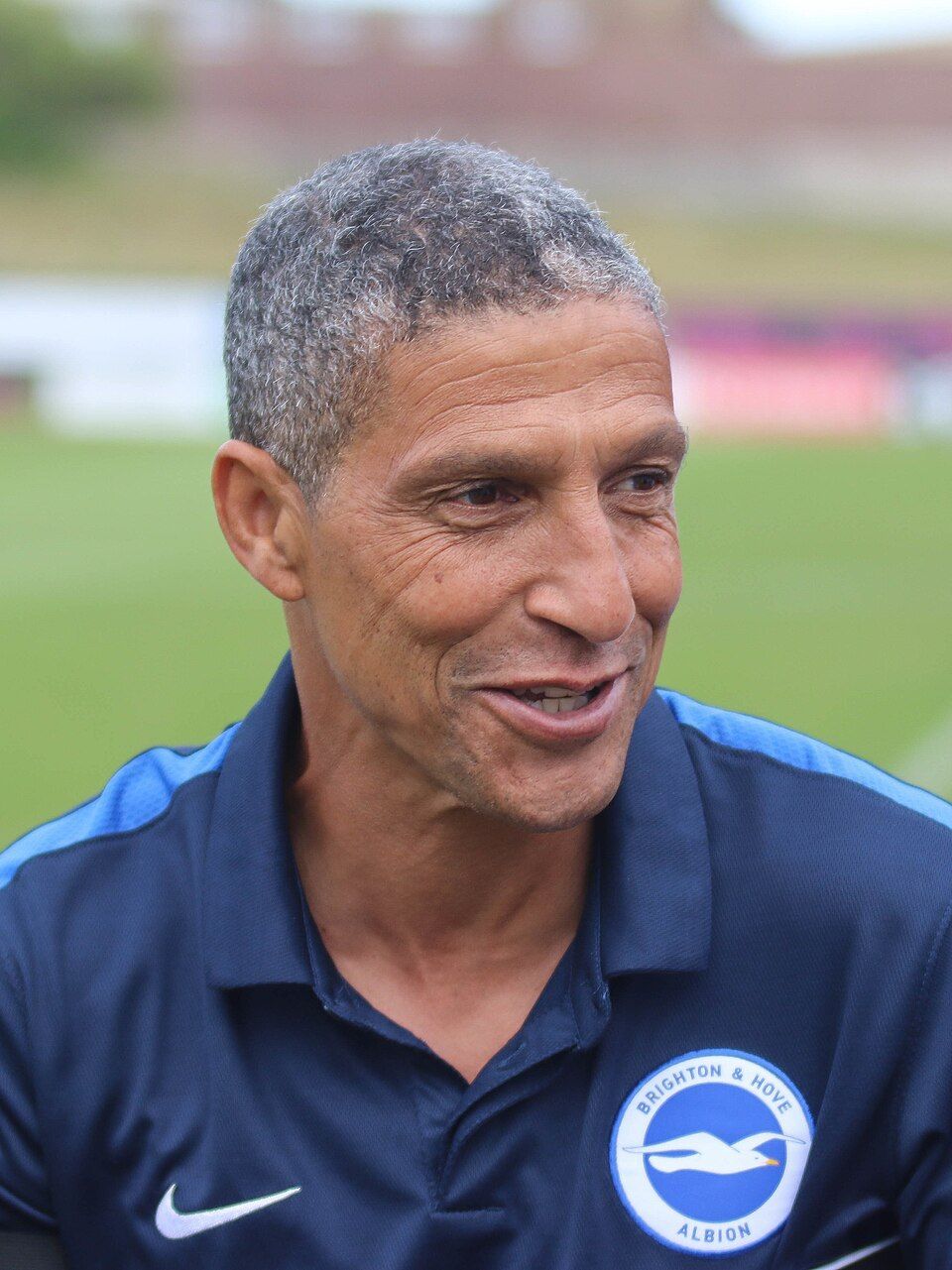
Chris Hughton was already one of the most experienced Black managers in English football when he came to Brighton.
The son of an Irish mother and a Ghanaian father, he had enjoyed a long playing career with Tottenham Hotspur and the Republic of Ireland. He later worked as a coach and managed Newcastle United, Birmingham City and Norwich City.
At Brighton, Hughton steadied the team and kept it in the Championship. The transformation during his first full season was striking.
Albion challenged for automatic promotion throughout 2015–16 and lost only five league games. The side finished level on points with Middlesbrough but missed promotion on goal difference, then lost to Sheffield Wednesday in the play-off semi-finals.
It was a painful ending, but Hughton kept the core of the team together.
The following season, Albion secured promotion with three matches remaining. A 2–1 victory over Wigan Athletic at the Amex on 17 April 2017 was followed by celebrations across the stadium and city. Brighton & Hove Albion had reached the Premier League for the first time.
Hughton then kept the club in the division for two successive seasons. His team was organised, disciplined and often difficult to break down. It also reached the FA Cup semi-final in 2019, returning Albion to Wembley 36 years after Ramsey and his teammates had played there.
Hughton left in May 2019. Debate about that decision belongs to football, where managers are ultimately measured through results. Yet his wider importance to Brighton is difficult to dispute.
He inherited a club close to the Championship relegation places and left it as an established Premier League organisation with another season of top-flight football ahead.
He did so as Albion’s first Black male manager, at a time when the number of Black managers in English professional football remained notably low.
Hughton has generally spoken about race in a measured way, without allowing it to define every discussion of his work. The same care is needed when telling his story. His appointment was historically significant, but he did not win promotion because he was a symbol. He won promotion because he was an effective manager.
Hope Powell and a different part of Albion’s history
Only a few months after Hughton led the men’s team into the Premier League, Hope Powell arrived to manage Brighton & Hove Albion Women.
Her appointment in July 2017 joined two important careers at the same club. For almost two years, Albion’s senior men’s and women’s teams were both led by Black managers.
Powell brought experience unmatched by most coaches in the women’s game. She had played 66 official matches for England and became the national team’s first full-time head coach in 1998.
She was the first woman and the first Black person to manage an England senior national football team. She was also the first woman to gain the UEFA Pro Licence, the highest coaching qualification available in European football.
Her Brighton role came during a period of major change in women’s football. Clubs were becoming more professional, but the gap between the best-funded sides and the rest remained considerable.
Albion entered the Women’s Super League following Powell’s first season. Her job was to build a team capable of remaining there.
Progress was not immediate or smooth. Brighton finished in the lower half of the table during its early WSL seasons, but it survived and gradually became more competitive.
The high point came in 2020–21. Powell’s team defeated champions Chelsea 2–1, ending a long unbeaten league run, and finished sixth, Albion’s best WSL position at that time. The side also reached an FA Cup semi-final during her period in charge.
Just as importantly, the setting around the players improved. The women’s team gained access to stronger training facilities and support at Albion’s performance centre in Lancing.
Powell managed 116 Brighton matches and took charge of every WSL game played by the club during its first five seasons in the competition. She stepped down in October 2022.
Her departure followed a poor run of results, and that should not be hidden. A balanced history must leave room for difficult endings as well as achievements.
But the end of Powell’s time at Brighton does not erase what came before it. She helped take a developing women’s side into the fully professional top division and gave it a base from which to grow.
Five stories, not one experience
It is tempting to group Dave Busby, Chris Ramsey, Terry Connor, Chris Hughton and Hope Powell together under the word “pioneers”.
There is some truth in that description. Each was the first Black person to reach a particular point in Albion’s history.
But the word can become too comfortable. It risks turning racism and exclusion into obstacles that were simply overcome by exceptional individuals.
Busby should not have needed unusual strength to withstand racist abuse as a teenager. Ramsey and Connor should not have entered a game where Black footballers were judged through stereotypes. Hughton and Powell should not have been unusual sights in senior management.
Their achievements matter, but so do the conditions in which those achievements were made.
Their Brighton connections were also different. Busby’s senior career at Albion was short, while Connor spent four years at the club. Ramsey reached Wembley as a player. Hughton led the men during one of the most important periods in Albion’s modern history. Powell helped build a place for the women’s side in the top division.
They should not be made to stand for every Black player, coach or supporter who has been part of the club. Nor should their experiences be treated as identical.
What they offer, when placed together, is a line running through more than half a century of Brighton football.
From the Goldstone to the Amex
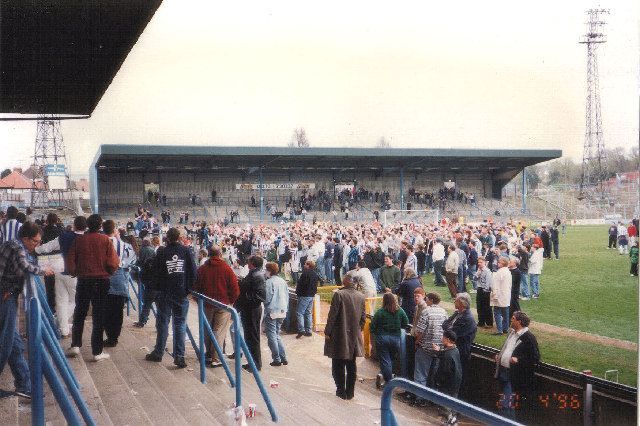
Dave Busby’s debut took place at the Goldstone Ground in 1973. The club was in the Third Division and a Black player in the team was still considered unusual enough to be remembered as a first.
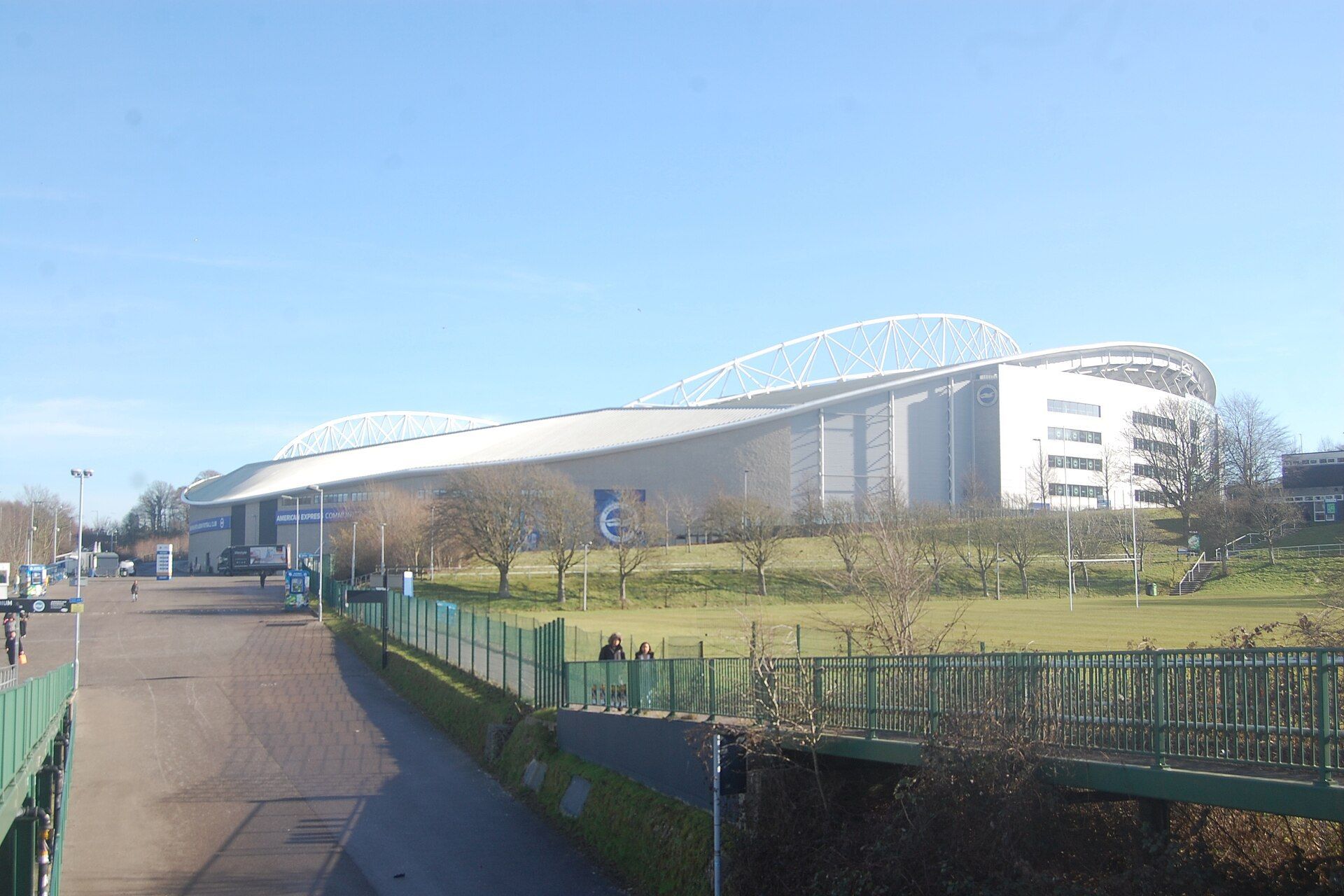
By the time Chris Hughton and Hope Powell were managing at Albion, the club had a modern stadium, a Premier League men’s team, a Women’s Super League side and a training centre used by both.
That is a remarkable change, but buildings and league positions are only part of the history.
The fuller story is also about who was able to take part, who was allowed to lead and whose contribution was remembered.
Busby, Ramsey, Connor, Hughton and Powell each moved that story forward in a different way. They played, scored, coached, organised teams and carried the expectations placed upon them.
Their names belong in the history of Brighton & Hove Albion not only because they broke barriers, but because of what they contributed once they crossed them.
From ten minutes at the Goldstone to promotion celebrations at the Amex, their stories form an important part of Brighton and Hove’s Black history.
The body content of your post goes here. To edit this text, click on it and delete this default text and start typing your own or paste your own from a different source.


Sources:
Brighton & Hove Albion, “On this day: Busby makes Albion debut”, 20 October 2024.
Brighton & Hove Albion, “David Busby: Proud To Be Albion”, October 2021.
Brighton & Hove Albion, “Black History Month: Proud To Be Albion”, October 2021.
Brighton & Hove Albion, “Terry Connor: Proud to be Albion”, 14 October 2021.
Brighton & Hove Albion, men’s first-team history.
Brighton & Hove Albion, “March looks back on promotion-sealing win over Wigan”.
Brighton & Hove Albion, “Powell steps down as Albion women’s first-team manager”, 31 October 2022.
Brighton & Hove Albion, “Players pay tribute to Hope Powell”, November 2022.
The Football Association, “Hope Powell”, History of the Women’s National Leagues.
The Football Association, “English football’s Black icons for Black History Month 2025”.
Image credits
Chris Hughton at Lewes, July 2015
Photograph by James Boyes. Licensed under
Creative Commons Attribution 2.0, via
Wikimedia Commons. Image cropped from the original.
Terry Connor, 2011
Photograph by Badgernet. Licensed under
Creative Commons Attribution-ShareAlike 3.0, via
Wikimedia Commons.
Hope Powell managing Brighton & Hove Albion Women, April 2018
Photograph by Katie Chan. Licensed under
Creative Commons Attribution-ShareAlike 4.0, via
Wikimedia Commons.
The Goldstone Ground, Hove, April 1996
Photograph by Nigel Cox. Licensed under
Creative Commons Attribution-ShareAlike 2.0, via
Geograph Britain and Ireland and Wikimedia Commons.
The former Goldstone Ground site, Hove, May 2018
Photograph by Hassocks5489. Released under the
Creative Commons CC0 1.0 public-domain dedication, via
Wikimedia Commons.
Photograph by Hassocks5489. Released under the Creative Commons CC0 1.0 public-domain dedication, via Wikimedia Commons.
Related Articles
Related Articles